Why Your Toilet Keeps Running
A flush that never quite finishes usually means a cistern fault, and one of three parts is nearly always the culprit. This page explains why a toilet keeps running, which cistern parts a home owner may legally swap, and when the job belongs to a licensed plumber. The Redcliffe team at Redcliffe Same Day Plumbing wrote it for peninsula households in plain terms.
If we're late, $100 comes off your bill

- Licensed and InsuredEvery job done by a licensed plumber. QBCC No: 15024607
- Fixed Quote FirstFlat-rate pricing, agreed before any work starts
- Lifetime Labour WarrantyBacked by our Fix-It-or-It's-Free guarantee (T&Cs apply)
- $0 Call-Out FeesNo extra charge for nights, weekends or public holidays
Plenty of those cisterns sit in apartments built along the foreshore since the 1970s, where nobody opens the bathroom cupboard often enough to catch a fault early. A trickle that runs for weeks lands on someone's bill either way.
The Three Causes of a Running Toilet
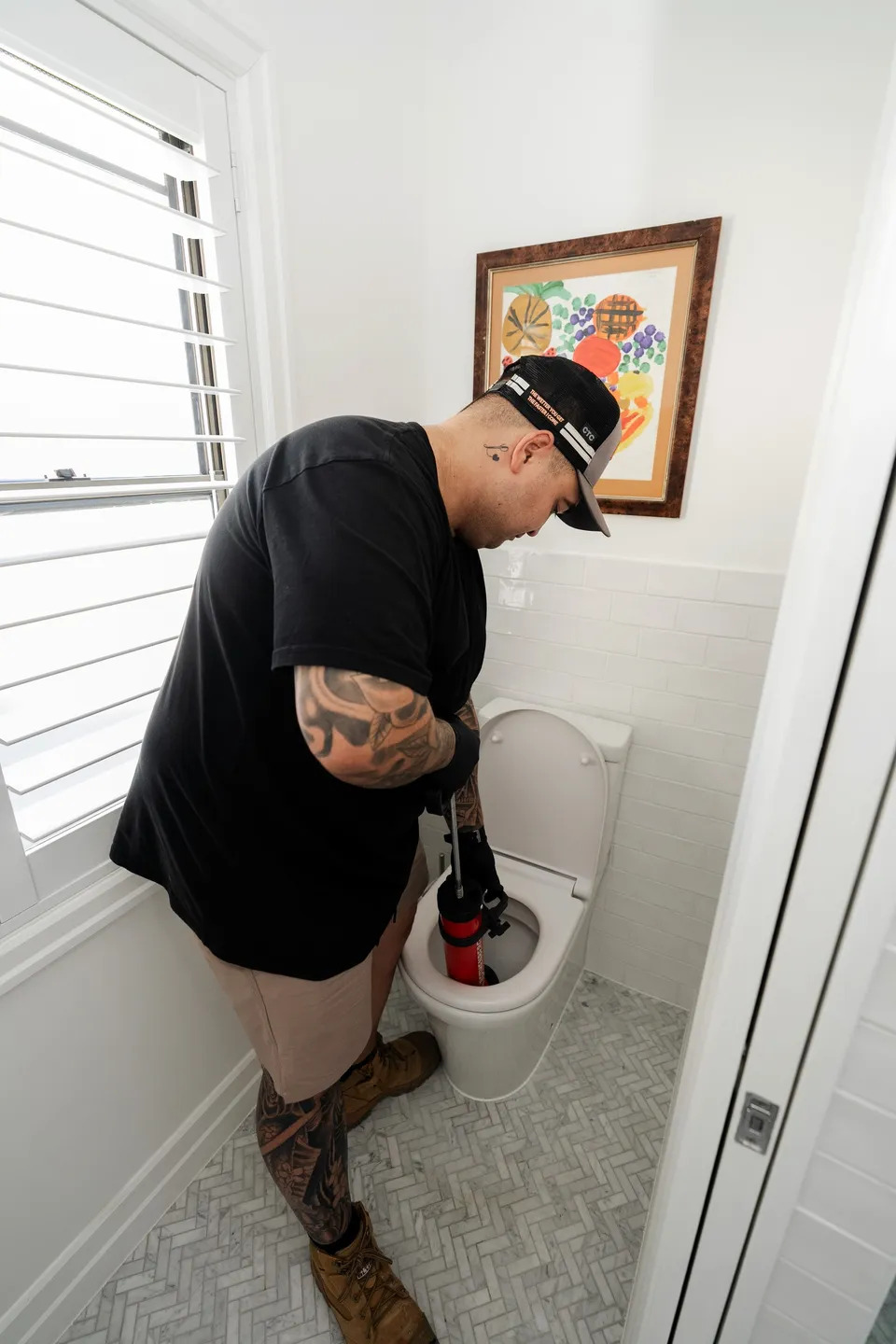
Three faults cover almost every case. The inlet valve may refuse to shut off, the flush valve seal may leak water into the pan, or the level may sit so high that it spills through the overflow.
Each one leaves its own sign:
A constant hiss or trickle
after the cistern has refilled means the inlet valve is still letting water through, which points you straight to it.
A cistern topping itself up
every few minutes with nothing flushed, or water creeping down the rear of the pan, means the seal on the flush valve is passing water.
An overflow running freely
, including a pipe dripping outside, means the level has been set past the point where the excess can escape.
After a flush, the inlet valve tops the cistern back up and closes when the float hits its mark. The flush valve, also called the outlet valve, holds the water between flushes. When either one fails, the other works overtime and the pan pays for it.

Slow, Partial or No Refill After a Flush
A cistern that refuses to fill usually points to an inlet valve blocked or worn out, a float sitting below its mark, or a stop tap left part-way open. Try the stop tap first, since a half-closed valve starves the cistern before any washer gets the blame.
The confusing case is water running in while the level never rises. That means the flush valve seal is releasing water as fast as it arrives, so the pan sees a steady flow the whole time.
Slow rather than stopped? The inlet valve stays the first suspect, because build-up and aged seals both choke the flow.
The Dye Test for a Leaking Cistern
Here is the test: drop some food colouring into the cistern, hold off flushing, and give the colour time to travel.
Then read the result:
Colour drifting into the pan
means water is escaping past the seal.
A clear pan
means the flush valve holds, so look next at the inlet valve and the level.
Flush once you have your answer, because food colouring will not stain a ceramic bowl.
No colouring in the house? Lay a dry sheet of toilet paper at the rear of the pan, above the water line. A leak will dampen it before long, and a sheet that stays dry means no trickle.
Which Cistern Parts a Home Owner May Replace
Queensland law lets anyone with the right knowledge and skill handle three cistern parts. The QBCC names them as unregulated work:
- the drop valve washer
- the float valve washer
- the suction cup rubber
No licence, approval or report is needed for those three swaps, though whatever you touch still has to satisfy the minimum standards in the plumbing legislation and codes. Every other toilet repair is minor work, so a QBCC licensee has to do it. No permit applies, and no Form 4 either.
Rentals run differently. The tenancy Act puts the owner or manager in charge of keeping the place in good repair, and the tenant passes faults on as soon as they appear.
Queensland's emergency repairs list also includes a blocked or broken toilet. A cistern that runs sits outside that list, which makes the fix routine, done within a reasonable time.

What a Running Cistern Does to Your Water Bill
No, Unitywater's concealed leak adjustment leaves leaking cisterns out. The adjustment exists for hidden pipe breaks, and fixtures are excluded by name alongside taps and hot water systems.
The property owner also carries primary responsibility for leaks on their land and the losses from them. A tenant in a unit near the TAFE campus on Steven Street or behind the RSL club on Irene Street pays nothing toward the fix, but the owner's account keeps climbing until someone books it.
That exclusion turns a running cistern into a phone-call-today job. Every refill the pan swallows lands on a bill somewhere, and no adjustment window opens for it.
When to Call a Plumber
Book a licensed plumber once the dye test shows colour in the pan, or when the hiss keeps going after the cistern has filled. Both mean a part outside the three unregulated washers has failed, and Queensland's rules hand that work to a licensee.
The same goes for water escaping through the overflow. Redcliffe Same Day Plumbing resets levels and replaces valves under the licence, so the running stops instead of the bill.
Toilet repairs in Redcliffe is the page that covers the trade side: what we fix, how we quote and what a visit involves.
Toilet Questions From Redcliffe Homes
Call (07) 3524 7163Why does my toilet keep running after I flush?
Three faults explain most cases. The inlet valve may not be closing, or the flush valve seal passes water into the pan, so the cistern keeps topping up. The level can also sit high enough to spill through the overflow. A constant hiss points to the inlet valve, and a cistern topping itself up points to the seal.
Will Unitywater cover a running toilet in Redcliffe?
No, Unitywater's concealed leak adjustment leaves leaking cisterns out, so nothing comes back off the bill. The property owner holds primary responsibility for leaks and the losses from them, which makes the repair worth booking early instead of watching the usage climb.
What is the overflow in a toilet cistern?
The overflow is a safety outlet inside the cistern. It carries excess water into the pan instead of letting it spill onto the floor, and it comes into play when the inlet valve will not close or the float sits too high. Water running from it means the level needs setting.
What does it cost to fix a running toilet in Redcliffe?
The price hinges on two things: which part has failed, and how easily we reach the cistern and its stop tap. A cistern boxed into a tight unit bathroom takes longer than one with clear access. You get the figure as a fixed quote before any work starts, and nothing goes ahead without your go-ahead.

Call Us About the Running CisternWe'll call you back.
Phone (07) 3524 7163 for a licensed plumber in Redcliffe. We work under QBCC No: 15024607, with flat-rate pricing, no hidden fees and same-day where we can.
To claim your $0 call-out fee, call (07) 3524 7163 today.